One building, many heights
A skyscraper does not have a single height. It has a height to its roof, a height to its highest occupied floor, a height to the top of its architectural form and a height to its very tip. These can differ by hundreds of metres, so the first question in any ranking is which one is being used. The difference is not a technicality: it decides who holds the record. [1] [2]
The Council on Tall Buildings and Urban Habitat, the international body that maintains the official rankings, measures buildings in four main ways. Height to architectural top includes spires and architectural elements but excludes antennas and other functional equipment. Highest occupied floor measures the top of the highest occupiable level. Height to top of roof excludes equipment above the roof. Height to tip includes antennas and anything else attached to the top. [1]
Each measure is useful for a different purpose. Roof height suits comparisons of the built structure, highest occupied floor describes how high people can actually work or visit, and height to tip is usually the biggest number and the one most often quoted in casual conversation. When two sources disagree about which building is tallest, they are often simply using different definitions rather than different facts. [1] [2]
The spire versus antenna question
The distinction between a spire and an antenna once changed the record books. A spire is an architectural element that belongs to the shape of the building, so it counts towards the architectural top. An antenna is functional equipment for broadcasting or communications, so it does not. When the Petronas Towers were completed, their spires were counted as architectural, and they displaced the Sears Tower, whose tall antenna was not counted, as the world’s tallest building. [1] [3]
That decision was debated at the time and is still the clearest illustration of why measurement rules matter. Under one set of rules a building wins, and under another it does not. The outcome depends not on how tall the structure really is, but on what the top of it is made of and how it is classified. [1] [4]
Antennas are usually added for broadcasting and can be extended, replaced or removed without changing the building below. That is exactly why they are treated separately. A spire, by contrast, is designed as part of the building and cannot be removed without altering its architecture, so it is counted even though it may contain nothing at all. [1] [5]
How height is physically measured
Official heights are not measured by dropping a tape from the roof. Surveyors establish a datum, usually a defined ground level, and measure upward using instruments such as total stations and levelling equipment, or with satellite positioning for verification. The result is corrected for the building’s actual condition, including settlement, so that the published figure refers to a consistent reference point. [2] [4]
Tall buildings also move. They sway in the wind and lean slightly as the sun heats one side more than the other, so a measurement has to be taken in defined conditions and reported as a nominal height rather than an instantaneous one. For a record to be comparable, the method behind it has to be stated as carefully as the number itself. [1] [4]
Vanity height
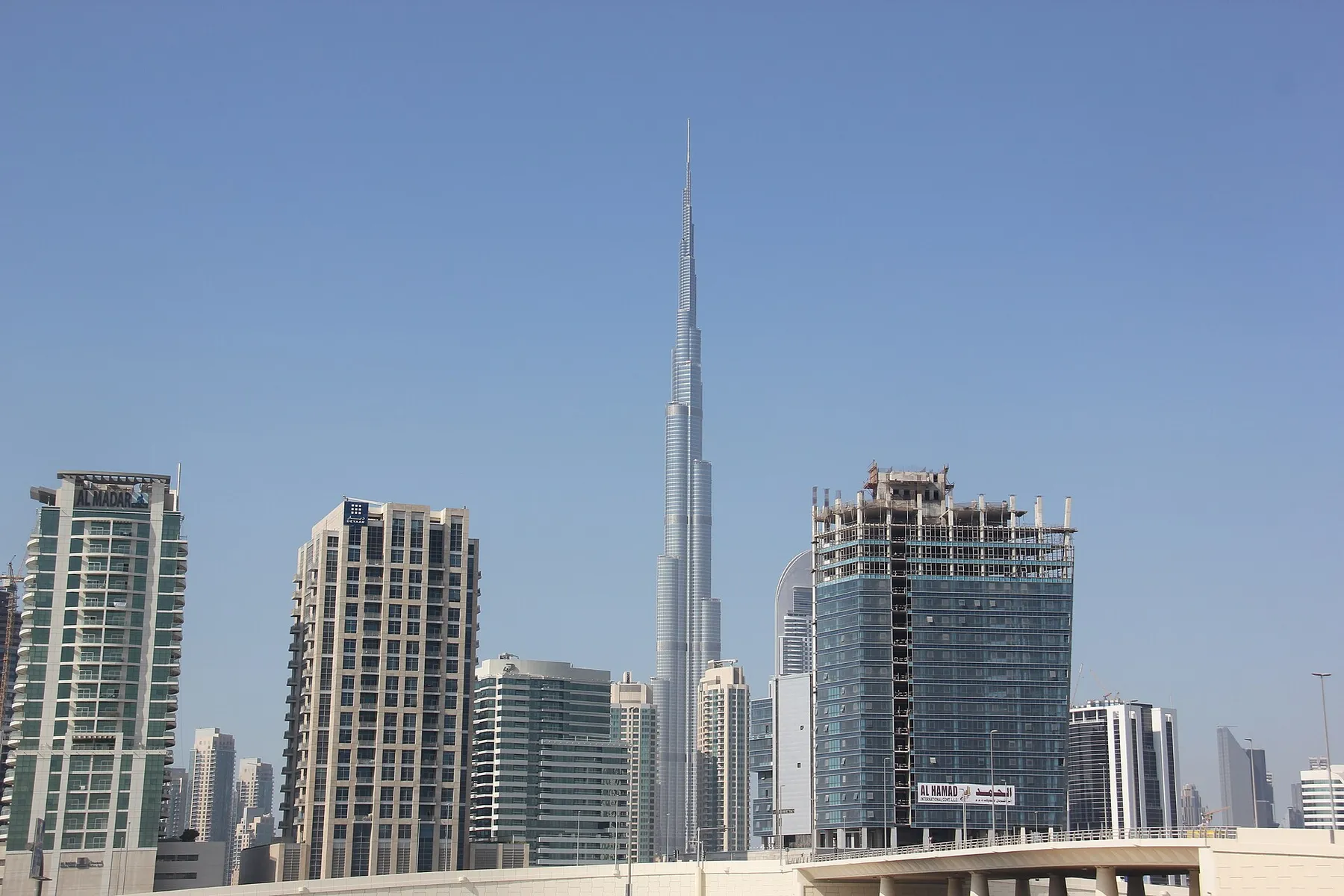
The gap between the architectural top and the highest occupied floor has a name: vanity height. It is the part of a tower that makes it taller in the rankings without being used by people. A spire, a decorative crown or a sculpted summit can all add to a building’s height while remaining empty, and the Council on Tall Buildings and Urban Habitat has tracked this gap as a way of describing how much of a building’s height is not occupiable. [6] [1]
In the tallest towers the vanity height can be very large in absolute terms, and in some buildings with modest floor counts it can be a remarkable share of the total. This does not make a building dishonest or useless, since crowns and spires also serve architecture, wind and identity. It does mean that a ranking based on architectural top and a ranking based on occupied floors would order some buildings differently. [6] [5]
In the very tallest buildings the gap runs to more than two hundred metres of non-occupiable height, which is taller than many complete skyscrapers. Regulators and planners have started to notice, because a crown that adds height can also add cost, wind area and maintenance obligations without adding usable space. Vanity height is therefore both a ranking curiosity and a real design question. [6] [1]
Occupied height and observation decks
The highest occupied floor is often an observation deck, a restaurant or a mechanical level that people can reach. Observation decks are important because they are public, revenue-generating spaces and because they mark the point at which a building is genuinely usable at height. Where a tower has a very tall crown, the observation deck can sit hundreds of metres below the architectural top. [5] [6]
Occupied height also matters for practical reasons. People, services and lifts must reach the highest occupied floor, and the parts of the tower above it still have to be maintained, lit and kept safe. A building can be architects’ tall and engineers’ tall at the same time, and the two numbers may not agree. [1] [7]
Observation decks are usually the highest spaces a visitor can reach, and their level is a good guide to the genuine usable height of a tower. When a deck is described as being on the 124th floor or near 550 metres, that figure is a statement about occupation, not about the summit of the building, and the two can differ by a large margin. [5] [6]
Who decides the record?
Records are not self-declaring. The Council on Tall Buildings and Urban Habitat reviews buildings against published criteria, which include being a self-supporting structure, having a substantial portion of its height occupiable and having a recognised architectural form. These criteria are meant to exclude temporary structures, observation towers and masts that are not buildings in the ordinary sense. [1] [2]
The distinction between a building and a structure is why there are separate lists. A broadcast mast or an observation tower can be taller than the world’s tallest building, but it is not ranked as a building. Understanding which list a claim belongs to is the first step in checking it. [2] [4]
Why the definitions matter
For developers and cities, a height record is marketing, identity and sometimes a planning argument. For engineers and researchers, the definitions are a way of comparing like with like, since structural behaviour, cost and sustainability all depend on real usable height rather than on a decorative summit. Both uses are legitimate, but they need different numbers. [4] [1]
On this site, buildings are ordered by their published architectural height, and the measurement basis is stated wherever a comparison is made. Reading a height figure without its basis is like reading a temperature without a scale: the number is real, but it does not mean much on its own. [8] [1]
That is why a claim of the world’s tallest should always be read with the qualifying words attached: tallest building, tallest structure, tallest occupied floor or tallest to its tip. The words do the work, and the number alone can be made to say almost anything. [2] [6]
Takeaways
Skyscraper height is defined in several ways, and the ranking depends on which one is used. Architectural top counts spires but not antennas; tip height counts everything; highest occupied floor and roof height describe the usable structure. [1] [6]
Vanity height describes the non-occupiable summit of a tower, and international records are adjudicated against published criteria by the Council on Tall Buildings and Urban Habitat. Buildings and structures are ranked separately, so a taller mast is not automatically a taller building. [6] [2]
Sources & references
Sources reviewed 16 September 2026. Undated guidance and product pages can change. Dated research and announcements retain their original context; technical principles do not substitute for locally adopted project standards.
- Wikipedia. Council on Tall Buildings and Urban Habitat.Accessed September 2026.
- Wikipedia. List of tallest buildings and structures.Accessed September 2026.
- Wikipedia. Willis Tower.Accessed September 2026.
- Wikipedia. Skyscraper.Accessed September 2026.
- Wikipedia. Observation deck.Accessed September 2026.
- Wikipedia. Vanity height.Accessed September 2026.
- Wikipedia. Elevator.Accessed September 2026.
- Wikipedia. List of tallest buildings in the world.Accessed September 2026.